
Carrot and Stick
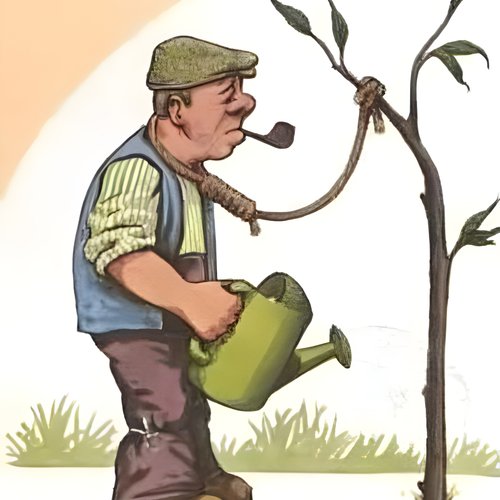
A person truly becomes free when they transcend the mechanisms of reward and punishment. Society may establish its order through these mechanisms, but it is only the individuals who choose virtue beyond carrot and stick who can uphold truth and justice.
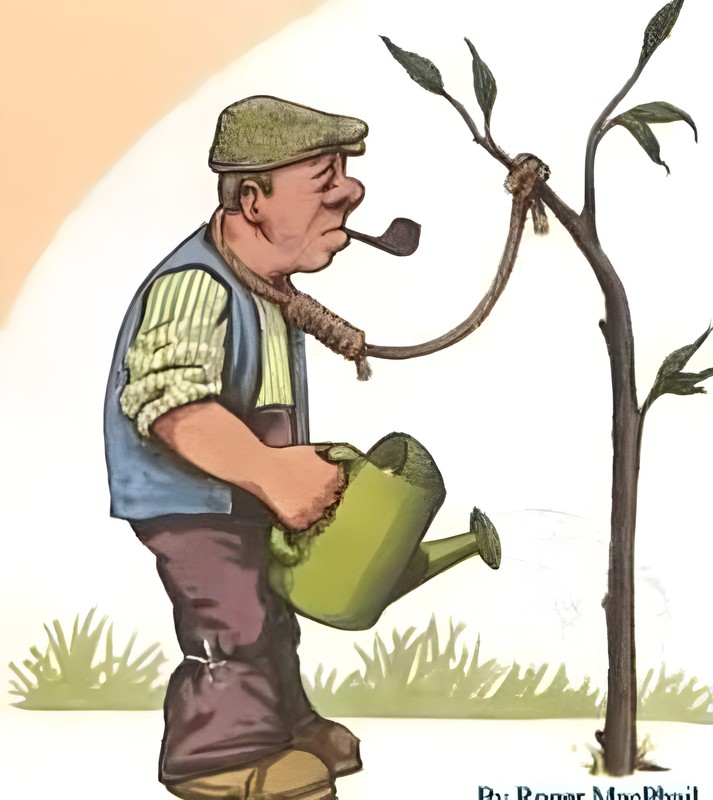
The most fundamental definition of a human being emphasizes reason and will. These two elements, defined by universally accepted common denominators, are also indispensable prerequisites for virtue. The patterns and standards of reason and will are largely undisputed; being reasonable and willful are character traits that are both praised and flattered, and they form the cornerstones of personality. But what if it's not us who determine reason and will, but environmental factors such as peer pressure, customs, and laws? What if the life we believe to be free and virtuous is nothing more than the imagination of the man in the jar?
When I try to think about this, I focus on the forces that guide human behavior: reward and punishment, the carrot and the stick.
My mind is busy and tired, my forehead is burning. Despite all the advice from my editor, Mr. Gökhan, I hope you will understand my style, writing language, and choice of sentences/words, which I have been unable to focus on. I hope you understand me.
Life is like a stage directed by invisible hands. Although there is no puppeteer or strings in the literal sense, one of the fundamental tools that guide individuals' behavior is the balance of reward and punishment. Society resorts to these two mechanisms to maintain order, ensure harmony among individuals, and legitimize authority. A child receiving praise for doing their homework, an employee being rewarded with a promotion or bonus for their performance, or someone who breaks the law being punished with imprisonment or a fine—all are different reflections of the same principle.
Carrot and stick. I chose this title because the reward and punishment mechanism is also a fundamental method in animal training. For example, when a horse behaves correctly, it is rewarded with a carrot; when it behaves incorrectly, it is punished with a stick. The carrot and stick method enables the animal to learn but does not develop its will.
(I advise those who are easily offended by mildly provocative content (considering the stick) to stop reading here. Not just this article, but reading altogether…)
The carrot is a symbol of reward and recognition. People are praised, applauded, rewarded, recognized, and honored for what they do. Anything that satisfies some of a person's material or spiritual needs is a reward. The expectation and need for reward shapes behavior. In Shakespeare's plays, heroes often act with the expectation of winning society's approval; even Hamlet's quest for justice is initially shaped by social expectations.
The stick, on the other hand, symbolizes punishment, social pressure, and sanctions. When a person takes a wrong step, they are feared, excluded, despised, and punished. In medieval Europe, public punishment of offenders not only demonstrates the stick’s effect on individuals but also demonstrates how those in power used it as a sociological tool to control society.The stick is a threat that requires obedience and must be avoided.
Reward is inherently attractive. When the human mind sees the possibility of future satisfaction, it often pursues it without questioning. Even when the promised reward is objectively worthless, its appeal draws people in and directs them toward certain behaviors. The stick, however, is like a wall built around what should not be done. People avoid certain behaviors out of fear of punishment. Thus, reward and punishment shape behavior in its most basic form. This mechanism is only a tool for learning, as it is in animals; it should not shape human character, conscience, or virtue.
Humans are beings capable of transcending the system of reward and punishment; they can think, question, and make virtuous choices. Indeed, the measure of humanity's superiority over animals lies not only in being guided by reward and punishment, but also in the ability to choose what is right through one's own reason and will.
True freedom, strong character, and virtue emerge from choices made without expectation of reward or fear of punishment. This choice arises from one's own reason and will; it is not a prisoner of external pressures or fleeting desires. Virtue becomes clear precisely here: choosing what is right without being tempted by the carrot or yielding to the threat of the stick...
Socrates demonstrated what it means to insist on truth, setting aside the fear of death, under the intense political and social pressure of Athens. Despite receiving the death penalty and being offered the chance to renounce his beliefs and escape, Socrates' stance symbolizes virtue beyond reward and punishment; defending the truth in the face of death; it is a powerful example of preserving human virtue, character, freedom, and the independence of conscience.
Crowds are filled with people chasing rewards or avoiding punishment—personalities shaped by the carrot and stick. This simple balance can also be a trap that separates people from their moral essence. If an individual does what is right only for the sake of reward or avoids doing something wrong only to escape punishment, then they are not truly acting with free will. Here is one of the fundamental questions of philosophy, sociology, and psychology: Can humans defend the right even if it brings adverse consequences? And what does this stance mean beyond social order?
Some responses to this question:
Kant strictly rejects basing morality on utility. For him, truly moral action arises from “duty”; a person acts according to the moral law simply because it is right, independent of consequences. Therefore, the expectation of reward or fear of punishment extinguishes the value of the action. Kant’s emphasis on “good will” ties virtue to pure conscience rather than conflicts of interest.
Aristotle, however, approaches the issue from a different point of view. According to him, virtue is a “state of character” acquired through habits. As a person repeats the right behavior, they internalize it and eventually do what is right without a reward or punishment mechanism. Here, virtue is the product of harmony established between the individual's inner balance and the benefit of society.
Hannah Arendt, in analyzing the culture of obedience we see in modern authoritarian regimes, demonstrates how the system of reward and punishment can transform into a totalitarian mechanism of obedience. The concept of “the banality of evil” explains how people often commit great evils for entirely ordinary reasons: either in anticipation of reward or out of fear of punishment. From this perspective, true virtue emerges in the attitude of those who break this chain of ordinary obedience and say “no.”
Nietzsche, however, offers a more radical perspective: According to him, the system of reward and punishment is a tool of “herd morality.” Society uses reward and threat to wear down the strong individual and bring the different into line. True virtue lies in creating one's own values despite the herd and being willing to pay the price for them.
Michel Foucault also analyzes the disciplinary mechanisms of power in modern society with a similar critique. Institutions such as prisons, schools, barracks, and factories all discipline bodies and minds through a system of reward and punishment. According to him, this system actually makes individuals obedient while outwardly they feel free.
Albert Camus, however, takes this debate to a more existential level. Man lives in an absurd world, in the midst of meaninglessness. In this world, virtue is doing what one believes to be right, without any expectation of reward and without regard for the threat of punishment. Camus's “rebellious man” stands up against injustice; even though he knows it will bring no reward, he chooses rebellion.
Émile Durkheim states that society shapes the individual through norms. Punishment is a tool that disciplines not only the offender but also the entire society through its deterrent effect. Therefore, it is functional; however, it can also limit the individual's autonomy.
Weber, while examining the rational legal order of modern society, demonstrates that rules are internalized through the logic of reward and punishment.
George Herbert Mead links the development of the individual's self to social interactions; children develop their being through the reactions of others. Therefore, reward and punishment are decisive in the early stages of identity formation.
Bourdieu explains that individuals experience reward and punishment systems in social areas through “symbolic capital”; approval is a reward, exclusion is a punishment.
Ibn Khaldun, however, explores this topic on a historical-sociological basis. According to him, states and societies rise thanks to a strong sense of “asabiyyah.” This asabiyyah strengthens society when it is built around shared values and solidarity, beyond the expectations of personal gain. However, over time, when this solidarity is reduced to relationships of interest and a balance of reward and punishment, disintegration begins. Ibn Khaldun's observation shows that virtue is the foundation of social order, but that the corruption of order also begins with the excesses of the reward-punishment mechanism.
B. F. Skinner's behaviorist approach argues that reinforcement is fundamental to learning. Positive reinforcement (reward) and negative reinforcement (removal of punishment) shape an individual's behavior. However, this approach reduces humans to mere external stimuli.
Lawrence Kohlberg, on the other hand, offers a more nuanced perspective by dividing moral development into stages. According to him, in the early stages, individuals do what is right solely to gain rewards or avoid punishment. However, as moral maturity develops, individuals come to understand the social contract and universal principles; in the final stage, individuals defend what is right simply because it is right. This is a model consistent with Kant's duty ethics. It thus confirms that virtue is a matter of maturity that transcends reward and punishment.
Cemil Meriç appears in this picture as the voice of our geography. According to him, pursuing truth often means “accepting loneliness.” Meriç says that the “fate of the enlightened” is to insist on the truth despite society, and sometimes even in spite of being punished by society. In his view, the mechanism of reward and punishment is a tool that facilitates the herd mentality of society. Those who speak the truth often face punishment; applause and reward are directed towards the ordinary truths that please the majority. In Meriç's words, “truth is like a castle; it needs not the applause of the surrounding masses, but the courage of a single heart.” This perspective complements Kant's duty ethics and Camus' rebellion from a local intellectual vein.
In the field of law and ethics, the issue is discussed in more concrete terms. Human rights documents are an effort to protect the rights of the individual against the state's system of rewards and punishments. The decisions of the European Court of Human Rights often limit the punitive mechanisms of national states and defend individual freedoms. Here, law should not only be punitive but also restorative. Because if law operates solely through deterrence, it encourages not virtuous behavior but only obedience based on fear. True justice, however, is possible through a system that encourages individuals to insist on what is right.
In light of all these discussions, the essence of virtue is revealed: defending what is right not for the sake of reward, but despite the punishment... From Ibn Khaldun's analysis of social decay to Kant's duty ethics, from Camus' rebellion against the absurd to Arendt's critique of banal evil, to Cemil Meriç's intellectual solitude, all thinkers agree on one point: when humans transcend the mechanism of reward and punishment, they become truly free. Society can establish its order through these mechanisms; however, it is only individuals who choose virtue beyond reward and punishment who will uphold truth and justice.
Historical examples are the embodiment of these theories. In ancient Greece, when Socrates was sentenced to death by the Athenian court, he continued to defend what he believed to be right, even though he had the opportunity to escape. For him, justice was based not on the expectation of reward, but on truth itself. In the Middle Ages, those who refused to renounce their beliefs despite the Inquisition's persecution often lost their lives through torture. In the modern era, Gandhi chose passive resistance against British colonialism; he was imprisoned several times, but his insistence on the truth led to India's independence. Martin Luther King defended the truth in his fight against racism in America, despite threats, prison sentences, and ultimately the danger of death. Nelson Mandela resisted despite spending 27 years in prison, and the idea of equality for blacks that he initiated in South Africa prevailed throughout the world. These examples powerfully demonstrate that virtue is a determination that transcends reward and punishment.
Today, in the modern world, people living between the rewards promised and the punishments threatened by politics, economics, and the media often choose silence to avoid losing their comfort and security. Yet history shows us that humanity's progress has always been the work of those who break this silence, who defend the truth even when it brings adverse consequences. Virtue is not an easily attained status; it often means being willing to pay a price, to face exclusion, to be punished. It is precisely this courage to pay that price that determines a person's true worth.
Stepping out of the ivory tower, leaving behind the comfort zone of the thornless garden, no matter how few may embrace it, no matter the cost, greetings to those who courageously defend the truth.
Vesselam…